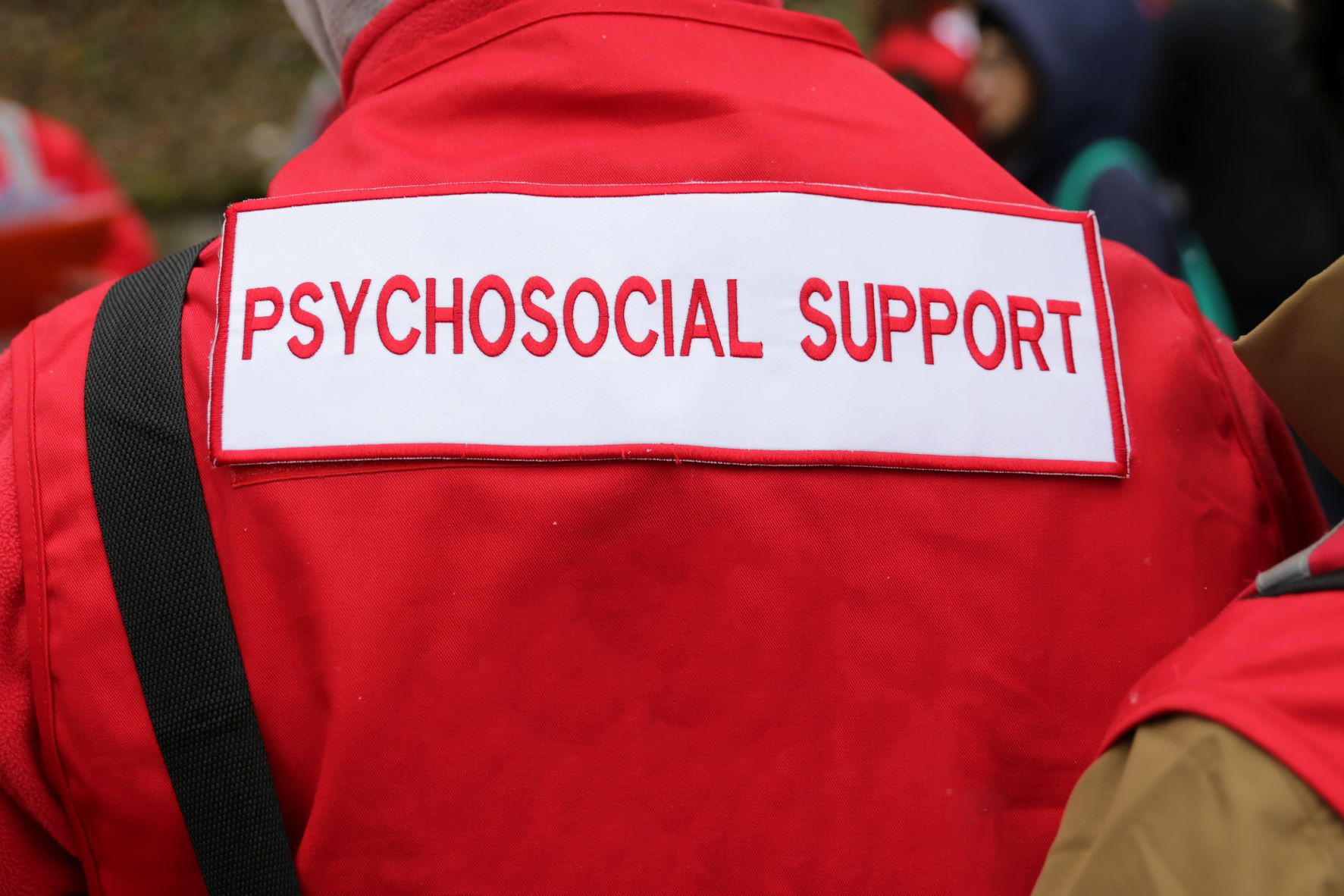
Trauma-Responsive Psychological First Aid
Day 1 training enabled participants to understand how to effectively manage their own psychological welfare in situations where they may be exposed to difficult or distressing situations/content.
The day began by explaining how human beings respond to threat, and the immediate impact this has on the body and brain. We then discussed the aftereffects of an acute stress response; defining and explaining the signs and symptoms of acute stress, post traumatic and prolonged/chronic stress. This led on to discussing why we may have evolved to have these aftereffects, and what the purpose and benefits of them might be and why they can be considered ‘normal’.
The second half of the day focused on psychological resistance and resilience. We explained what is meant by these terms and what straightforward strategies can help reduce the aftereffects of acute stress. We will explored what factors could increase vulnerability to being traumatised, and what simple strategies could help build greater resistance.
By the end of day 1 you understood more about why stress occurs and simple self-help strategies that can help you and others. You also explored when professional support should be accessed and how this type of support can help.

Day 2 of training built on the knowledge and skills from day 1. You learnt a psychological first aid model for providing support to an individual in distress; and you learnt how to apply the stress and trauma learning from day 1, to support people as they recover.
You practiced identifying signs and symptoms of stress and categorising them, then matching these with helpful coping strategies. You learnt the ALL-CALM model of psychological first aid and applied and practiced the skills training with role-play. You also learnt when it may not be appropriate to provide a support session and tools and techniques that can further assist a person who is experiencing intense emotions. The limitations of a PFA role were discussed and the differences between peer and higher crisis mental health care, provided by mental health professionals, explained.
At the end of the day you had knowledge and skills to identify and support a person experiencing distress. You were also asked to consider how the role of a psychological first aider might impact your welfare and what steps you can take with your own self-care to better manage that.