What
Positive mental health has three key components:
- Emotional wellbeing – which is about feeling happy and satisfied with life.
- Psychological wellbeing – where we positively engage in life; for example, at work or in our personal life.
- Social wellbeing – which means we maintain healthy, positive, social connections; for example, with family and friends.
Generally, mental health can be thought of as on a continuum. We all fluctuate back and forth between feeling healthy to reacting to injured to ill, depending on our circumstances at any point in time. As our mental health fluctuates so we experience changes in mood; attitude; sleep; physical health; activity levels’ and habits – essentially, how we think, feel and act.
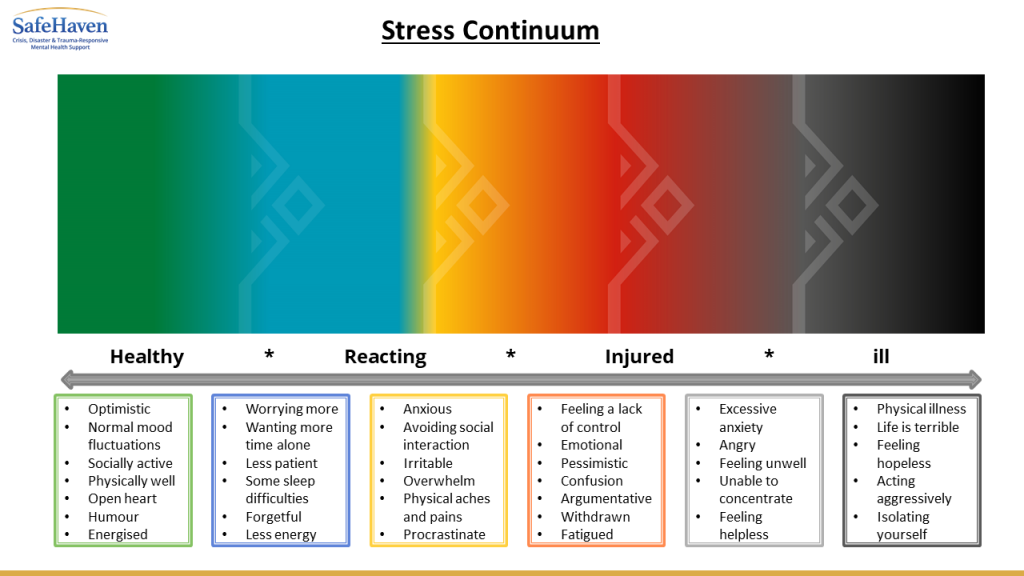
This wellbeing area is designed to help you learn and develop skills to foster positive mental health, helping you to feel emotionally and psychologically healthier. You have access to simple and easy skills training in this hub, that be used as often as you wish. This Hub will help you identify when you move out of the healthy area in the stress continuum and understand how to move yourself back.
When
How much time you dedicate to your wellbeing is a very personal decision. Everyone has times when they feel they are struggling, those are the periods when we need to spend more time taking care of our wellbeing. At other times, when we feel better in ourselves and life seems smoother, we often feel we need to invest less.

Here at SafeHaven we aim for a minimum of one daily practice that focuses on our wellbeing every single day. Sometimes this is a 10-minute mindfulness practice and other times it might be a 60-minute yoga session. We find keeping things flexible causes us less stress; after all most people have enough stress already in their lives and looking after your wellbeing should be fun and enjoyable – not a chore!
How
Whatever frequency you decide, we definitely recommend having a routine. This can help in ensuring you are always aiming towards ‘healthy’ on the stress continuum and is also particularly useful when learning a new skill. For that reason, our guidance would be to find which of the practices work best for you, then try out a routine – if it works and feels a good fit first time then great; if not then simply adapt and try out something different. Finding what feels good will help you stay motivated and develop your wellbeing practice over the longer term.