
What are your options?
There are many different sources of professional help available. These will range from those provided by your organisation to those that are available publicly (for example, the NHS in the UK) and privately. If you find yourself struggling, then do reach out for support.
The types of assistance available will often include:
Services your organisation may provide
- In-house peer-support networks
- Employee assistance counselling
Other support services
- Doctor/ General Practitioner (GP)
- Mental health professional
- Free support services
- Emergency services (Accident & Emergency Department)
Below is an overview of these different types of support, to help you decide what may be the best option for you.

Organisational support: Peer support
Peer-support means that colleagues, who are not mental health professionals, who are trained to provide workplace psychosocial support. They will provide confidential, supportive conversations and be able to provide simple self-help guidance to better manage the difficulties you are experiencing.
There are many benefits to reaching out to a trained colleague. They understand your work environment, the demands and stress you face and the people you work alongside. Speaking with someone who comes from the same company can help to feel heard and understood. They are often informed about company policies and available support systems, and may be able to advise and signpost you to people that can best assist when there are specific work-related difficulties.
Types of peer-support
Typically there are 2 different types of peer-support an organisation may choose to provide:
- Wellbeing champion/mental health buddy
- Trauma-responsive psychological first aider

1. Wellbeing champion/mental health buddy
People are trained to have supportive conversations and provide guidance on managing stress and improving your wellbeing over the longer term. Typically people will have completed a 1 or 2 day mental health awareness course. An example of a well known course brand is Mental Health First Aid, although there are a wide range of other courses available that do this same training.
2. Trauma-responsive psychological first aider
People are trained in both psychological trauma awareness and psychological first aid. They will have completed a 2 or 3 day training course. People are trained to support a person who is distressed or who has recently experienced significant trauma or distress. As well as de-escalating heightened emotions, they are trained to provide self-help guidance on how to recover from acute stress and distress and will meet you at least twice, to support you through your recovery.
Note: If you have completed either of these training courses with SafeHaven you will find the course materials within the Training Hub of the App.
Organisational support: Employee assistance counselling
This service will be provided by a third-party organisation. The service will provide you with access to mental health professionals and typically you will be offered several sessions (usually up to 6). This type of service is confidential and organisations do not know which of their employees has accessed the service. Typically the counselling provided will be short-term solution-focused or person-centred counselling, sessions are usually 1 hour long and you can expect to meet with the same counsellor for all your sessions.

Doctor/General Practitioner (GP)
Your medical doctor or local GP can provide you with immediate support if you are in distress and they can also refer you for ongoing support. Depending on your what you and your doctor decide is most appropriate, you may be referred to a psychiatrist, psychologist or counsellor/psychotherapist.
If you require medication to support your mental health then this will either be prescribed by your GP or they will refer you to a psychiatrist. Only a medical doctor can prescribe medication. A psychiatrist is a medical doctor that has specialised in mental health and can prescribe medication and other forms of treatment.
For talking therapy your doctor will refer you to either a psychologist or counsellor/psychotherapist. If you have experienced significant trauma and your doctors suspects you may have PTSD, then you will most likely be referred to trauma specialist support.

Mental Health Professional
A mental health professional refers to someone who has specialist training in mental health. There are different types of mental health professional, some with a medical background and others a psychological one.
Types of mental health professional include:
- Psychologist
- Counsellor/psychotherapist
- Psychiatrist
- Psychiatric nurse
- Social worker
When people use the term ‘mental health professional’ they usually are referring to people who provide talking therapies, such as psychologists and counsellors/psychotherapists.
As well as services provided by government (an example would be the NHS in the UK) and your organisation (such as employee assistance counselling), people often decide to access their own private counselling/ psychotherapy. If you decide to do this, remember to check they are suitably qualified and ensure you feel able to build trust with them over time. The outcome of any type of talking therapy is influenced by the level of trust and rapport between client and therapist and so it is important to consider.
Free support services
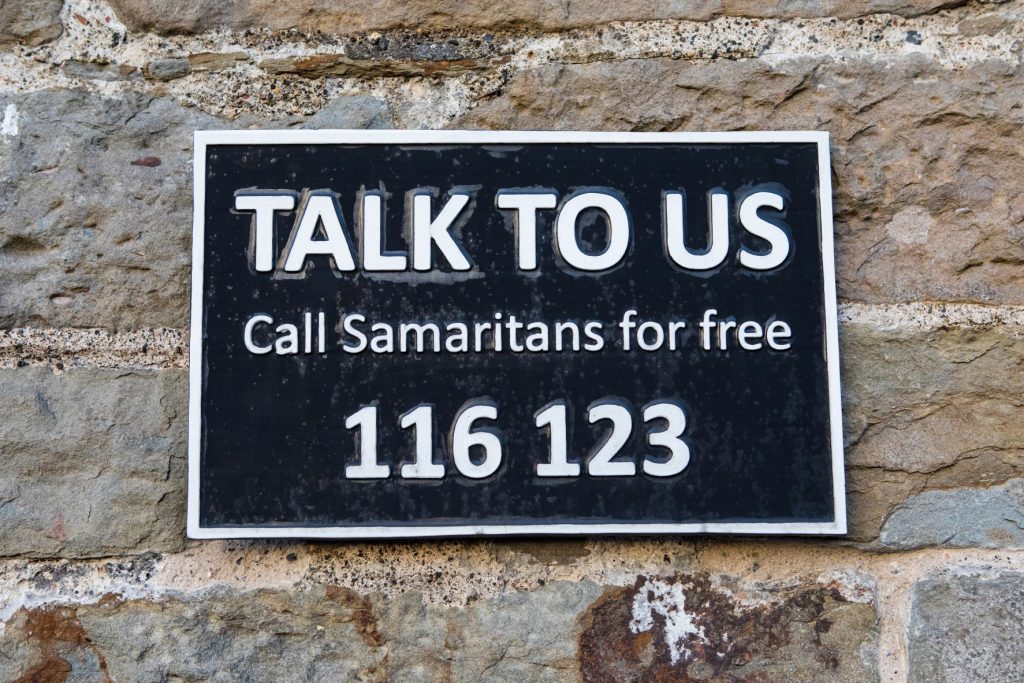
Free support services can be a life line. Trained volunteers are available at the end of the phone, text or email, where you can access support and talk to someone. Certain services, such as the Samaritans, are available 24/7, and so can be there for you to reach out to in the early hours of the morning, when nobody else may be available.
Check out ‘Where to go for help’ to find contact details for a range of different volunteer support services.
Emergency services

If you are highly distressed and are unable to calm yourself enough to keep yourself safe, that is the time to reach out to the emergency services. Whilst an accident and emergency department at a hospital can seem a frightening place to go, especially if you are already distressed, they also can provide immediate assistance. Hospital provides you with access to medical doctors who can prescribe medication to help significantly reduce distress quickly, if necessary.
In the UK, if you cannot get to a hospital A&E department then call 999. The emergency services are there to help you stay safe and well and will do all they can to assist.
Outside of the UK, accessing immediate medical assistance will be location specific. For that reason, it is best to ensure you know what your options are before you need them.